STEP RIGHT UP.
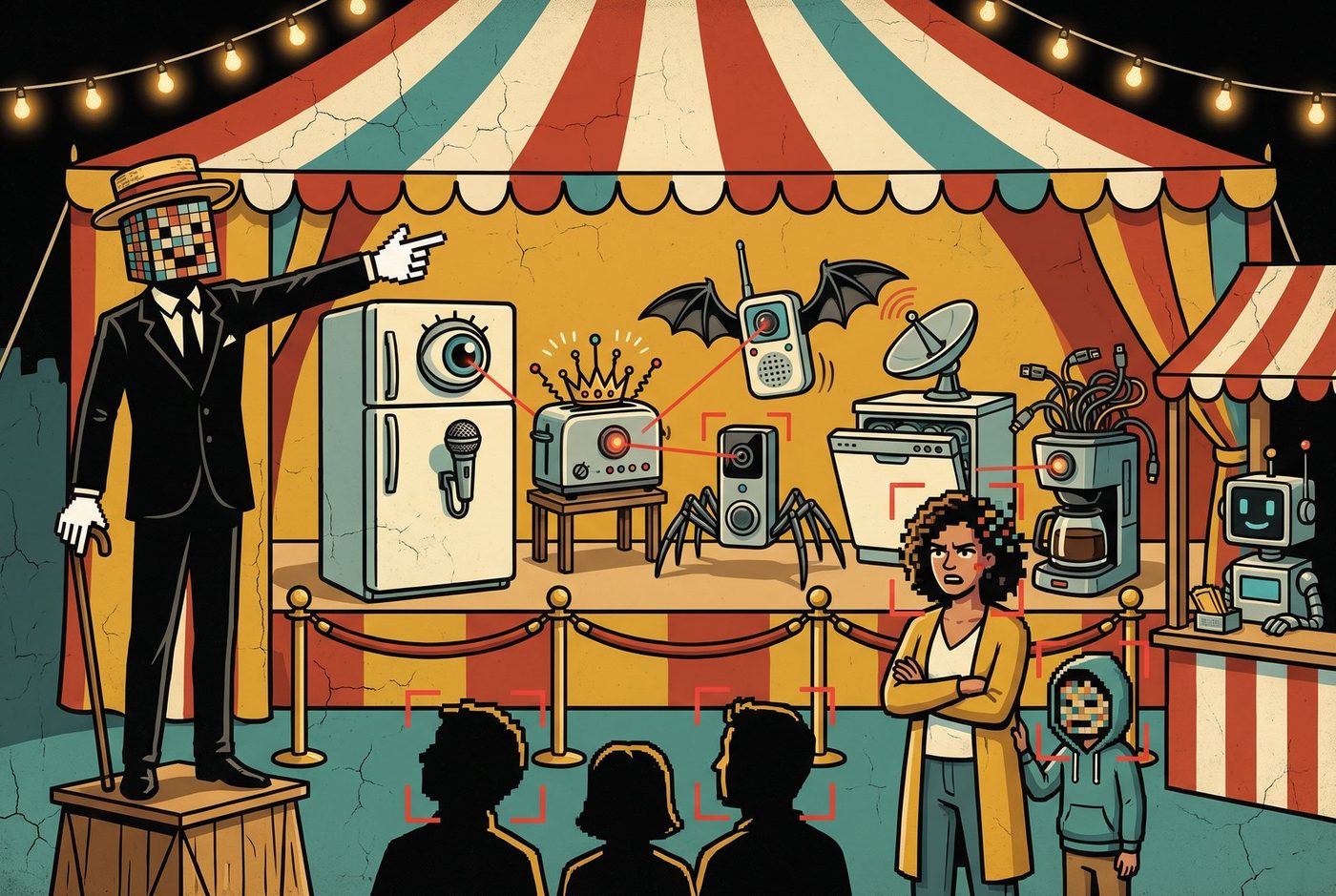
CONNECTED TO EVERYTHING.
NEEDED BY NO ONE.
1,100device categories built on one Chinese white-label platform, Tuya
Source: letter from Senators Rubio, Scott and Cotton, 2021
THE SANITY ACT · TITLE I
Hardware-Level Compliance and OS Accountability
Strict liability for the operating system, firmware and cloud providers behind connected consumer hardware, and a necessity test that limits new products to the network connections their functions require.
TITLE I · 1 MIN 20 SEC
Title I starts with the hardware. Televisions, cameras, routers and appliances now ship with network connections and firmware licensed from outside suppliers, and the security bill stays with the household.
Justice Department, March 19, 2026. Four botnets disrupted, built from at least 3,000,000 hijacked devices, hundreds of thousands of them in the United States.
The largest, Kimwolf, ran on more than 2,000,000 devices, most of them off-brand Android TV boxes sold for pirated streaming. A single Chinese white-label platform, Tuya, supplies the firmware and cloud behind more than 5,000 brands.
CISA, April 2026. Chinese state-sponsored actors are threatening critical infrastructure through covert networks of compromised devices.
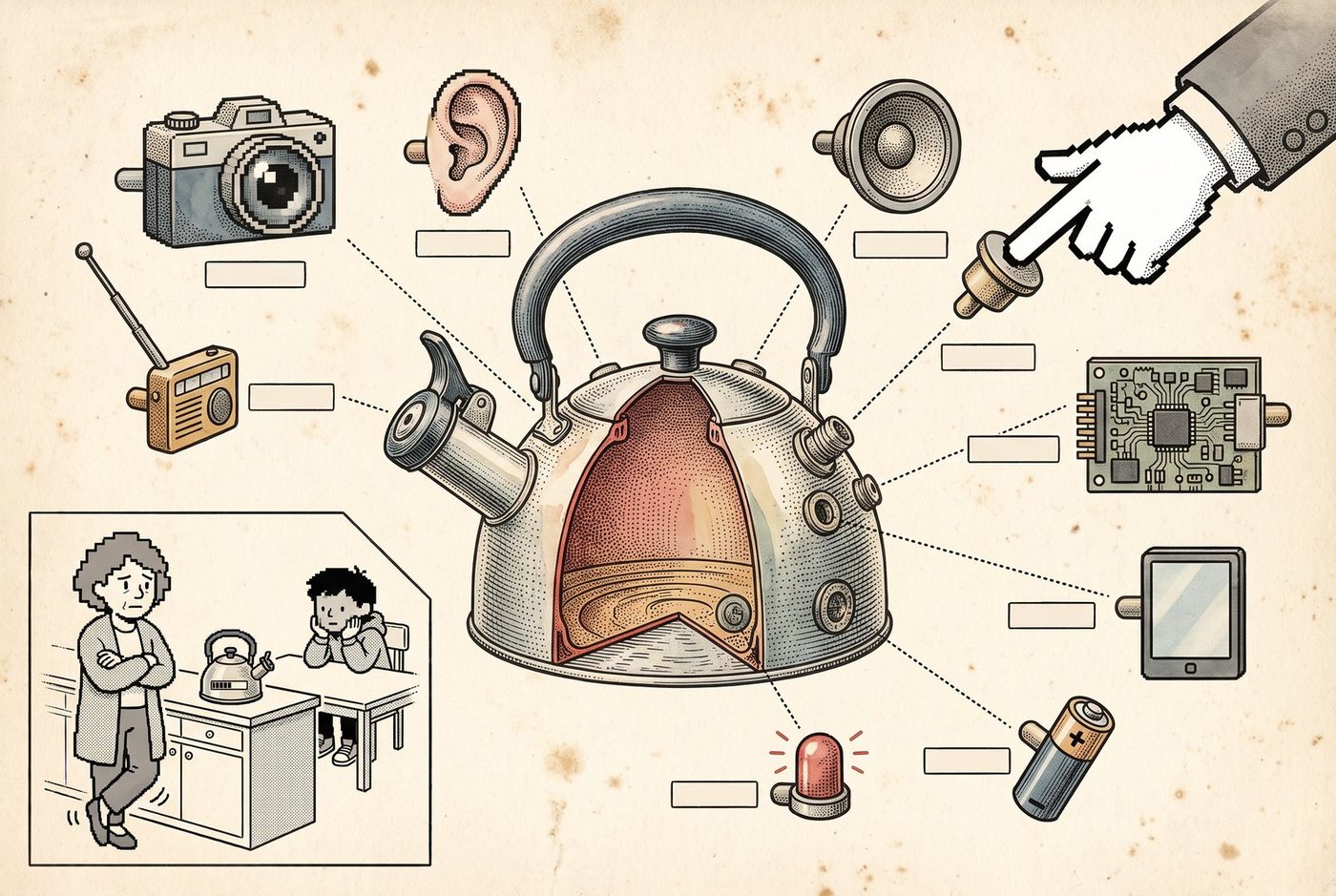
Title I makes the operating system, firmware and cloud providers strictly liable for the code they let run on connected devices. New products get a network connection only where the function needs one. A dishwasher has no use for Wi-Fi.
SADHOT. Software applications deprecate humanity over time. The SANITY Act is a Lexeme legislative framework.
CONNECTED TO EVERYTHING.
NEEDED BY NO ONE.
1,100device categories built on one Chinese white-label platform, Tuya
Source: letter from Senators Rubio, Scott and Cotton, 2021
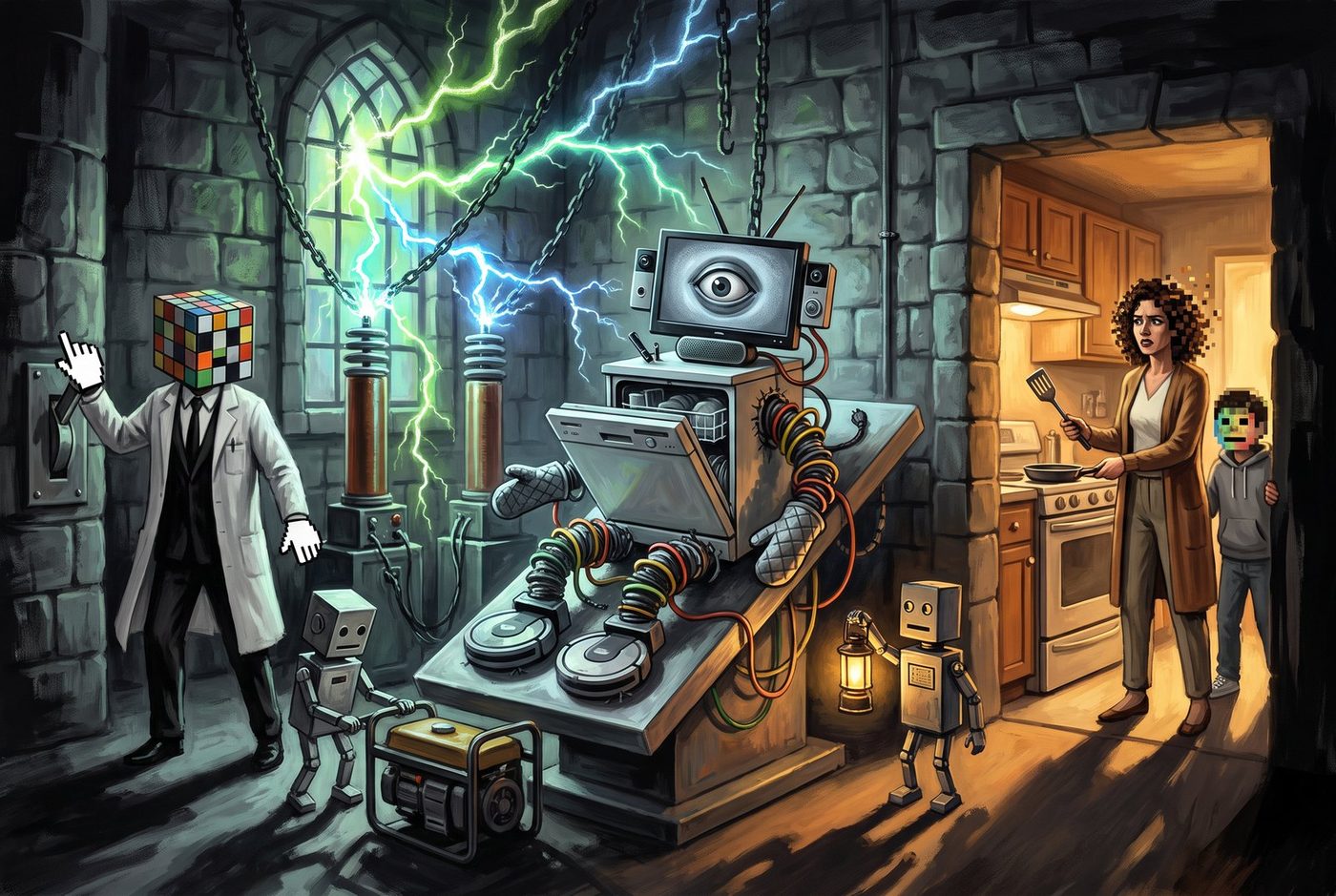
CONNECTED TO EVERYTHING.
NEEDED BY NO ONE.
2,000,000devices infected by the Kimwolf botnet, mostly off-brand Android TV boxes
Source: KrebsOnSecurity, January 2026
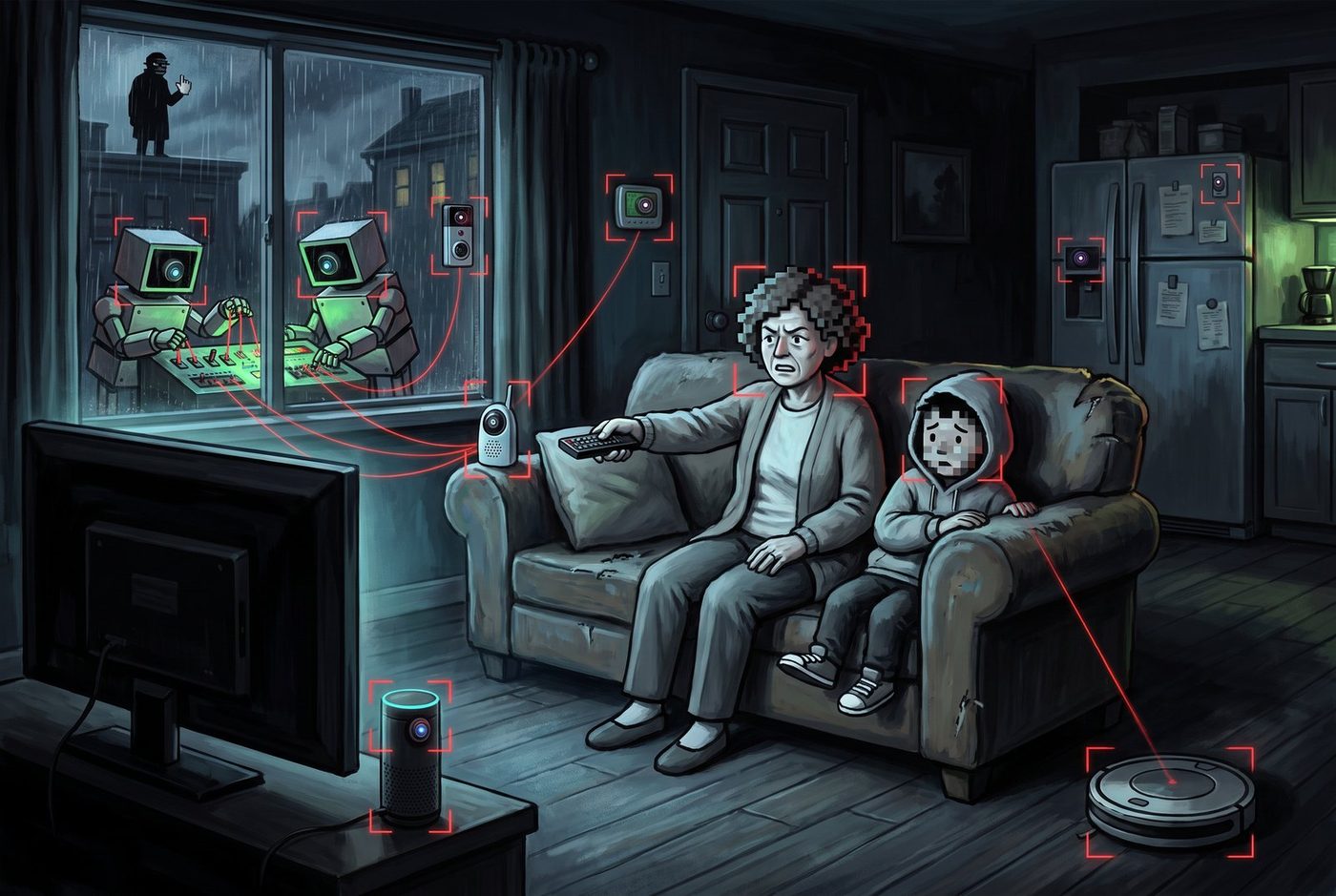
SMART HOME, DUMB RISK.
100times a second Texas alleges LG smart TVs capture what is on your screen
Source: Texas attorney general’s 2025 lawsuit, reported by iClarified
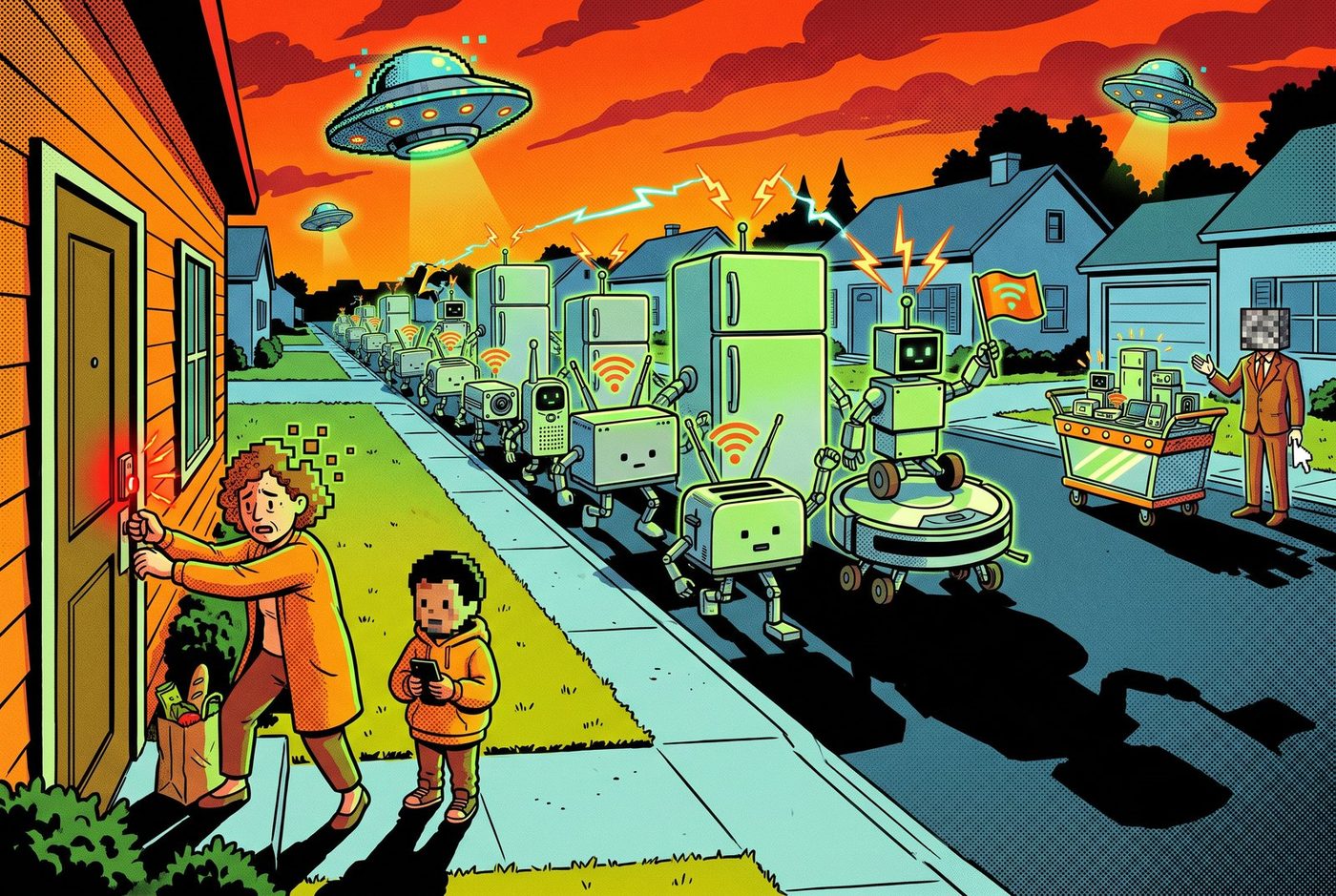
YOUR TOASTER
JOINED A BOTNET.
3,000,000routers, cameras and TV boxes conscripted into the botnets the Justice Department disrupted in March 2026
Source: The Hacker News, March 2026
CONNECT ONLY WHAT
NEEDS CONNECTING.
5,000+brands built on the same Chinese white-label firmware platform, Tuya
Source: letter from Senators Rubio, Scott and Cotton, 2021
Title I targets the Internet of Things: televisions, streaming boxes, cameras, routers, appliances and toys that ship with an operating system and a network connection whether or not the job requires one. Each of those devices is a computer sitting on the home network, and the record now shows what cheap, unverified ones do at scale. On March 19, 2026 the Justice Department disrupted four botnets (AISURU, Kimwolf, JackSkid and Mossad) built from at least 3,000,000 digital video recorders, web cameras, Wi-Fi routers and off-brand Android TV boxes, hundreds of thousands of them in the United States. In April 2026 CISA warned that Chinese state-sponsored actors are threatening critical infrastructure through covert networks of compromised devices, the same method domestic intelligence documented when Volt Typhoon used home and office routers to pre-position against electrical grids and water supplies.
As drafted, it is unlawful to distribute connected consumer hardware lacking cryptographically secure execution barriers. The title is aimed at third-party attack vectors: the firmware, cloud services and companion apps that device makers license from outside suppliers, which is how a white-label platform like Tuya ends up inside thousands of brands. The providers of the operating systems, firmware and cloud platforms those devices run on are strictly liable when a device permits local execution of software that an independent verification committee has not approved, and non-compliant software is sandboxed, disabled or purged through mandatory updates, on the model of revoking an FCC equipment authorization. The committee is a third-party body established for this purpose and staffed by people already working in the industry, in technology governance and in adjacent fields. Developer machines and company-managed computers are exempt, and general-purpose phones and PCs sit outside the title, which keeps it on the connected devices that have no business running arbitrary code. Strict liability also puts a price on the needless connection. A manufacturer that adds Wi-Fi to a dishwasher takes on the full liability of a networked computer for a feature the appliance does not need, and that cost is the deterrent the title is built to create.
| Company | Role under Title I | Products reached | Record |
|---|---|---|---|
| Amazon | Platform and device maker | Echo and Alexa, Ring doorbells and cameras, Fire TV, Blink, eero routers | eero is among the brands caught by the FCC's March 23, 2026 ban on new foreign-made consumer routers |
| Alphabet (Google) | Platform | Android TV and Google TV, Nest cameras, doorbells and thermostats | The federal BadBox 2.0 warning tells consumers to watch for Android devices that are not Play Protect certified, so Google's certification is already the line Title I would make mandatory |
| Samsung | Platform and device maker | Tizen smart TVs, SmartThings, connected appliances | Sued by Texas over automated content recognition on December 15, 2025; changed its consent settings under an agreement with the state on February 26, 2026 |
| LG | Platform and device maker | webOS smart TVs, ThinQ appliances | Texas alleges its TVs capture screen data every 10 milliseconds |
| Sony, Hisense, TCL | Device makers (Hisense and TCL are based in China) | Smart TVs | Sued by Texas alongside Samsung and LG; the state obtained a temporary restraining order against Hisense |
| Roku | Platform | Roku OS players and licensed TVs | Reached as an operating system provider |
| Apple | Platform | Apple TV, HomePod, HomeKit | Runs only signed software; closest to compliant today |
| Meta | Platform and device maker | Quest headsets, Ray-Ban Meta glasses | Reached as the operating system provider for camera- and microphone-equipped wearables |
| Tuya | Firmware and cloud platform (Hangzhou, China) | White-label smart plugs, cameras, thermostats, appliances | Senators Rubio, Scott and Cotton wrote in 2021 that Tuya powers more than 5,000 brands across 1,100 device categories, subject to China's Data Security Law |
| TP-Link, Netgear, Ubiquiti | Router makers | Home Wi-Fi routers | New foreign-made models barred by the FCC since March 23, 2026 unless conditionally approved; Netgear holds an exemption through October 1, 2027 |
| Off-brand Android TV box sellers | Device makers and marketplace sellers | Unofficial streaming boxes, projectors, digital picture frames | Kimwolf infected more than 2,000,000 devices, mostly unofficial Android TV boxes sold for pirated streaming |
The necessity test applies prospectively. Products brought to market after the effective date may connect to a network only for functions that require a connection, on the finding that the utility of a network-enabled feature is far outweighed by the vulnerability it opens. The installed base stays outside the test, because no mechanism yet exists to isolate or sequester the Samsung, LG and TCL televisions and appliances already sitting on home networks; those devices continue to fall under the strict-liability and mandatory-update provisions above.